
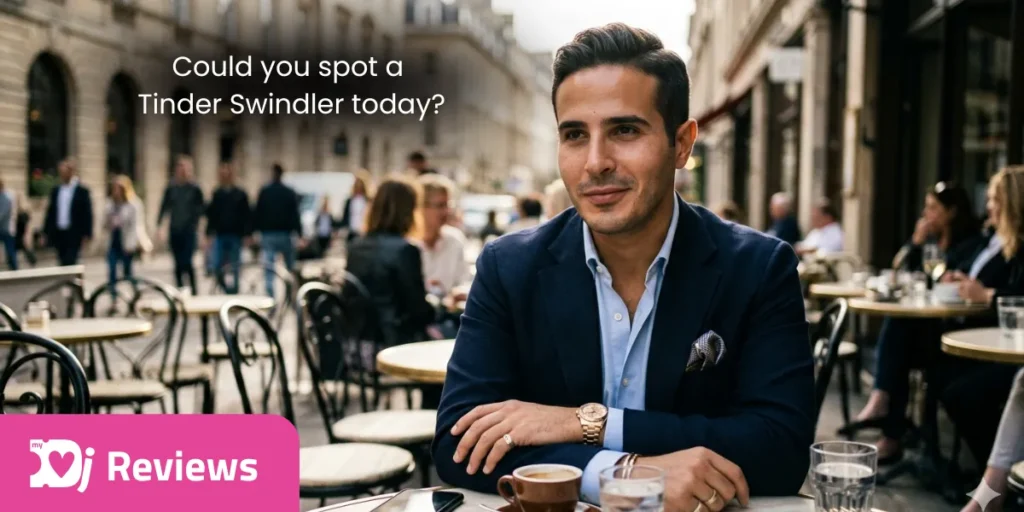
Simon Leviev used Tinder to con millions from women by faking a luxury lifestyle and manufactured emergencies. He walked free again in late 2025. Romance scams have only gotten worse since the documentary, now supercharged by AI. Here is what his story still teaches us, and the red flags that protect you today.
Here is a number worth sitting with for a second.
1 in 7 American adults has lost money to an online dating or romance scam. Not 1 in 100. Not 1 in 50. One in seven.
And the people it happens to are not naive or careless. They are regular people who wanted to meet someone real, and ran into someone who had spent months practicing how to seem exactly that.
The Tinder Swindler story is three years old now. But the lessons from it are more relevant than ever, because the tactics have gotten sharper, not softer.
What Simon Leviev Actually Did
If you have not seen the Netflix documentary, here is the short version.
Simon Leviev, whose real name is Shimon Hayut, used Tinder to meet women across Europe between 2017 and 2019. He presented himself as the son of a wealthy diamond mogul, complete with private jets, bodyguards, and five-star hotels.
Once a woman was emotionally invested, the script flipped. He would claim that dangerous “enemies” were targeting him and that he needed money urgently. Because the relationship felt real, and because he had already shown he lived an extravagant life, the request seemed credible. Women took out loans. Some went into serious debt. The money funded the next victim’s first date.
Tinder has confirmed he has no known active profiles or aliases on its service and has permanently banned him from the platform.
The 2025 Update Most People Missed
Here is where the story gets frustrating.
In September 2025, Leviev was arrested at an airport in Georgia on an Interpol Red Notice from Germany, where a woman alleged he defrauded her of around 50,000 euros after meeting on Tinder.
Two months later, he walked out free. German authorities withdrew their extradition request, citing a lack of evidence. He was released without bail, without travel restrictions, and without any conditions attached.
He has now avoided serious legal consequences multiple times. The point is not to dwell on one person. The point is that people who run this kind of con are skilled at it, and the systems designed to stop them often fall short. Your own awareness is the most reliable protection you have.
Why Smart People Still Get Fooled
This is the question most articles skip over.
It is easy to read the Tinder Swindler story and think “I would have seen through that.” Most victims thought the same thing before it happened to them.
Over a quarter of romance scam victims said they were feeling lonely when the scammer contacted them, and one in five said they overlooked red flags because they were excited about finding love.
Scammers do not target stupidity. They target emotion. Loneliness, hope, excitement, and the very human desire to believe that something good is happening. Once those feelings are in play, the part of your brain that normally spots inconsistencies goes quiet.
That is not weakness. It is just how people work. Understanding that is the first step to protecting yourself.
The Red Flags, Explained Plainly
Love Bombing: Too Much, Too Fast
There is a name for what Simon Leviev did in the early stages of every relationship. It is called love bombing. Constant messages. Deep conversations from day one. Declarations of connection after just a few days. Grand gestures.
It feels amazing because it is designed to. The goal is to create emotional attachment quickly, before you have had enough time to notice the gaps in their story.
The rule: real connections build gradually. If someone feels like a soulmate after a week, slow down.
The Emergency That Needs Money Right Now
The classic pattern from the Tinder Swindler was a sudden crisis, enemies, danger, bodyguard attacked, and an urgent need for money. The emotional pressure made the request feel real.
Scammers create urgency through medical emergencies, travel problems, or investment opportunities, and frequently request payment through gift cards, cryptocurrency, or wire transfers because these are hard to recover.
If someone you have never met in person asks you for money in any form, that is not a relationship. That is a scam in progress.
The New Version: Crypto Investment Scams
The emergency money request is the old playbook. The new one is more patient and more expensive.
It is called “pig butchering.” A scammer builds a genuine-feeling relationship over weeks or months. Then they casually mention they have been doing well with a crypto investment platform and offer to show you how it works. You invest a small amount, see fake returns, invest more. Then the platform disappears along with everything you put in.
It is now considered the most financially damaging romance scam worldwide. The reason it works is that by the time the investment comes up, you already trust the person completely.
Refusing Video Calls or Always Canceling
This is one of the clearest tells.
Someone who is genuinely interested in you will get on a video call. Scammers often claim they cannot meet because they live far away, are working overseas, or are deployed in the military. These are excuses designed to maintain a fake identity that a live video would instantly expose.
One unscripted video call where you can see their face, their surroundings, and how they respond in real time is worth more than months of texting.
AI-Generated Profiles: The New Layer
This one is genuinely new since the Tinder Swindler documentary.
35% of American adults have encountered fake profiles or AI-generated images while dating online, and fewer than half can tell the difference between a real dating profile photo and an AI-generated one.
Modern scammers can generate a photorealistic face that has never existed, create an entire social media presence for a fake person, and even use AI to conduct conversations at scale. The “person” you are talking to may not be a person at all.
A reverse image search on their photos is a good starting check. But even that is not foolproof with AI-generated images, since there is no original photo to find. The video call test is more reliable.
What to Do If Something Feels Off
These steps are simple and they actually work:
- Search their name and photos. Run their profile picture through Google Image Search. Check if their name, job, and city produce consistent results across social media.
- Suggest a spontaneous video call. Do not schedule it in advance. Ask right now. Genuine people usually say yes or offer a time within the same day.
- Tell someone in your life. Talk to a friend about the person you are dating online. Outsiders spot inconsistencies that emotions hide.
- Never send money before meeting in person. Not for emergencies. Not for travel. Not for investments. Not once.
- Report and stop contact immediately if a request for money comes up. On Tinder, you can block and report directly from the profile.
If It Has Already Happened to You
First, know this: romance scams can happen to anyone at any time, and there is no reason to feel embarrassed or ashamed. You trusted someone who was professionally trained to earn that trust.
If you have sent money, contact your bank immediately. Report the scam to the FTC at ReportFraud.ftc.gov and to the dating platform where you met the person. Acting quickly gives you the best chance of limiting the damage.
The Bottom Line
The Tinder Swindler is not a story about one unusually clever man. It is a story about tactics that are still being used right now, by thousands of people, at a larger scale and with better tools than Leviev ever had.
Most people on dating apps are genuine. But protecting yourself does not require suspicion of everyone. It just requires knowing what the pattern looks like before it starts. Love bombing, emergency money requests, crypto investment pitches, excuses for never video calling. Each one is a signal.
Real love moves at a pace that feels comfortable, not urgent. It never needs your bank account to make it work.
Want to know how Tinder really works before you start swiping? Read our full Tinder review to see what the app is like in 2026.
FAQs
Is Simon Leviev still free? Yes. He was arrested in Georgia in September 2025 on an Interpol notice from Germany, but was released two months later after Germany withdrew its extradition request. He currently faces no active criminal proceedings.
How common are romance scams in 2025? Very common and growing. Romance scam reports rose 20% in early 2025 compared to the same period in 2024. In the US alone, the FBI recorded nearly 18,000 romance fraud complaints in 2024 totaling over $672 million in losses.
What is love bombing? Love bombing is when someone overwhelms you with affection, attention, and emotional intensity very early in a relationship. It is a manipulation tactic used to build fast attachment before you have had time to notice red flags.
What is pig butchering? Pig butchering is a romance scam where someone builds a relationship over weeks, then introduces a fake cryptocurrency investment platform. Victims invest increasing amounts of money before the scammer and platform disappear entirely with their funds.
Can AI be used to create fake dating profiles? Yes. Scammers now use AI to generate realistic profile photos, maintain fake social media accounts, and even conduct conversations at scale using chatbots. A spontaneous video call remains the most reliable way to verify someone is real.
What should I do if I already sent money? Contact your bank immediately and report the transaction. File a complaint with the FTC at ReportFraud.ftc.gov. Report the profile on the dating platform. Act as quickly as possible since some transfers can be reversed if flagged early enough.